 Shadyside Inn Suites is different. Your idea of staying in a hotel is about to change. Our suites are not typical hotel rooms. In fact we do not have rooms; we only offer suites. Why are we different? Your suite is a fully furnished apartment with the same amenities as a hotel located in a residential neighborhood. It’s not just any neighborhood, it's Shadyside, Pittsburgh’s most quaint, trendy, and upscale urban area. Picture Boston’s Newberry Street, or New York’s East Village and you will get an idea of what the Shadyside area is like.Imagine having your own apartment in the best location in Pittsburgh for as little as a day or for as long as a lifetime. Shadyside Inn Suites is as flexible as you need. Only going to be here for a night? Why not have your own fully equipped apartment? Need somewhere to stay for a month while your house is renovated? Shadyside Inn Suites is your answer. Looking to attend the University for only nine months? Shadyside Inn Suites can accommodate. Think this is going to cost you more than a hotel? Not even close. Our rates are lower, our suites are double the size of any hotel in the area, our parking is free, and our location is unrivaled.Our suites are located within a block or two of some of the best dining, entertainment, and shopping in Pittsburgh. At your door are 135+ shops, 15+ restaurants and some of the best nightlife in the area. Shop in small boutiques, visit your favorite national store, and dine on cuisines from all over the world. Shadyside living is unmatched.Stay in Shadyside and still be approximately 4 miles from Downtown Pittsburgh and the Convention Center and less than 1 mile from the following hospitals: Presbyterian, Montefiore, Magee Women's, Falk Clinic, West Penn, Children's, Shadyside Hospital, and Western PsychiatricWithin 1 mile of the Shadyside Inn Suites is The Carnegie Museum of Art, The Museum of Natural History, The University of Pittsburgh, Carnegie Mellon University Chatham College, and Carlow College.Besides coming for a visit, the best way to learn about our story is read what other people have said about us. Please click on the following links to read what the professionals have to say
22 Şubat 2009 Pazar
shadyside ınn suites
Shadyside Inn Suites is different. Your idea of staying in a hotel is about to change. Our suites are not typical hotel rooms. In fact we do not have rooms; we only offer suites. Why are we different? Your suite is a fully furnished apartment with the same amenities as a hotel located in a residential neighborhood. It’s not just any neighborhood, it's Shadyside, Pittsburgh’s most quaint, trendy, and upscale urban area. Picture Boston’s Newberry Street, or New York’s East Village and you will get an idea of what the Shadyside area is like.Imagine having your own apartment in the best location in Pittsburgh for as little as a day or for as long as a lifetime. Shadyside Inn Suites is as flexible as you need. Only going to be here for a night? Why not have your own fully equipped apartment? Need somewhere to stay for a month while your house is renovated? Shadyside Inn Suites is your answer. Looking to attend the University for only nine months? Shadyside Inn Suites can accommodate. Think this is going to cost you more than a hotel? Not even close. Our rates are lower, our suites are double the size of any hotel in the area, our parking is free, and our location is unrivaled.Our suites are located within a block or two of some of the best dining, entertainment, and shopping in Pittsburgh. At your door are 135+ shops, 15+ restaurants and some of the best nightlife in the area. Shop in small boutiques, visit your favorite national store, and dine on cuisines from all over the world. Shadyside living is unmatched.Stay in Shadyside and still be approximately 4 miles from Downtown Pittsburgh and the Convention Center and less than 1 mile from the following hospitals: Presbyterian, Montefiore, Magee Women's, Falk Clinic, West Penn, Children's, Shadyside Hospital, and Western PsychiatricWithin 1 mile of the Shadyside Inn Suites is The Carnegie Museum of Art, The Museum of Natural History, The University of Pittsburgh, Carnegie Mellon University Chatham College, and Carlow College.Besides coming for a visit, the best way to learn about our story is read what other people have said about us. Please click on the following links to read what the professionals have to say
Hotel Pulitzer, a Luxury Collection Hotel
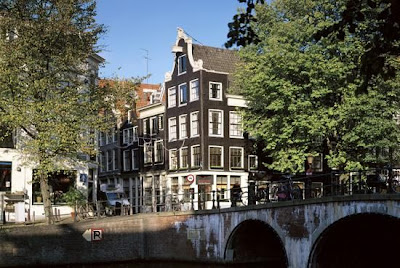 Overlooking two of Amsterdam’s most famous canals, this unique 5-star hotel is an icon of luxury and an ode to traditional Dutch architecture.Composed of 25 restored 17th and 18th century canal houses, Hotel Pulitzer artfully merges modern qualities with classic furnishings, placing it in a class of its own. The elegance of each room is reflected through the rich décor and enhanced by subtle lighting, creating an atmosphere of refinement.
The guarantee of tranquillity, allure of exclusivity and overall proximity to many of the main attractions are just some of the elements that make the hotel’s situation so ideal. These picture-perfect surroundings have been admired through the ages and uphold the reputation of being one of Amsterdam’s chicest neighbourhoods. Come and explore this historical heart of Holland then retreat to the lap of luxury
Hotel Elysees Ceramic 3 star
Country:
France - Ile-de-France
City:
Paris - 75008
Address:
34 avenue de Wagram
Tel:
33(0)1 42 27 20 30
Contact us
Click to mail this hotel
Hotel's website
ceramic-paris-hotel.com
The Hotel Elysées Ceramic with its unique " Art Nouveau" facade sculpted in painted ceramic blocks, has been tastefully and carefully restored to combine modern comfort with the original personality of an authentic and charming parisian hotel.In the heart of Paris, just two minutes from the "Champs Elysées" and the luxury shops of "rue du Faubourg St Honoré' and close to the business district of " La Défense".
Hotel services
24x24 hrs reception
Pets (dog and cat) welcome
Lift
Internet access
Safe boxes
Luggage storage
Air conditioning
Laundry Service
Excursions and tours
Car rental
Money exchange
Room services
Room service for breakfast
Hotel amenities
Light snack bar
Alcoholic drinks bar
TV room
Games room
Reading room
France - Ile-de-France
City:
Paris - 75008
Address:
34 avenue de Wagram
Tel:
33(0)1 42 27 20 30
Contact us
Click to mail this hotel
Hotel's website
ceramic-paris-hotel.com
The Hotel Elysées Ceramic with its unique " Art Nouveau" facade sculpted in painted ceramic blocks, has been tastefully and carefully restored to combine modern comfort with the original personality of an authentic and charming parisian hotel.In the heart of Paris, just two minutes from the "Champs Elysées" and the luxury shops of "rue du Faubourg St Honoré' and close to the business district of " La Défense".
Hotel services
24x24 hrs reception
Pets (dog and cat) welcome
Lift
Internet access
Safe boxes
Luggage storage
Air conditioning
Laundry Service
Excursions and tours
Car rental
Money exchange
Room services
Room service for breakfast
Hotel amenities
Light snack bar
Alcoholic drinks bar
TV room
Games room
Reading room
Conrad Punta del Este Resort & Casino.
Welcome to the Conrad Punta del Este Resort & Casino.Located in the heart of Punta del Este and only 20 minutes from the international airport, the Conrad Punta del Este Resort & Casino is the only Las Vegas-style casino and luxury hotel in the region. The hotel, which faces Gorriti Island and is only a short walk from La Mansa Beach, enjoys a strategic position 35 minutes east of Buenos Aires by plane and two-and-a-half hours south of Sao Paulo. The Conrad Punta del Este Resort & Casino offers 296 contemporary and luxurious guestrooms, including 24 beautifully appointed suites, all with open terraces and breathtaking views of the beautiful Uruguay coastline. The hotel’s five restaurants offer an eclectic mix of cuisines, ranging from our St. Tropez fine dining restaurant with Mediterranean and Italian influences, to our al fresco Gaucho’s Pool Grill & Bar.In addition to indoor and outdoor swimming pools, our Punta del Este hotel also features a health club, a luxury spa, and two outdoor tennis courts. The hotel is home to one of Uruguay’s largest convention centres, with a column-free ballroom, state-of-the-art meetings technology and a dedicated Business Centre. Wi-fi internet access is available throughout the hotel.The Conrad Punta del Este Resort & Casino effortlessly combines the height of contemporary luxury with the peerless tradition of hospitality and service for which every Conrad Hotel and Resort is renowned. So why not experience the greatest luxury of all… The Luxury of Being Yourself.Conrad Conrad Punta del Este Resort & CasinoParada 4 - Playa Mansa (20100), Punta del Este, Uruguay. Phone: (598 42) 491111 – Fax: (598 42) 489999e-mail: conradpde@conrad.com.uy Buenos Aires Sales OfficeManuela Saenz 323 - piso 5 of. 10, Puerto Madero, Capital Federal, Bs. As., ArgentinaPhone: (54 11) 57751900 - Fax:(54 11) 57751900 Ext. 1350800-22-CONRAD (266723)conradbue@conrad.com.uy
KOLZER - GLITTERING SURFACES...

GLITTERING SURFACES...
KOLZER’s plant and metallization processes improve the quality and beauty of materials ...the future is of HiTech biocompatible finishings THE PROJECT
In many areas of application, vacuum coating technologies continue to replace traditional methods such as chromeelectroplating. The flexibility of this technique enables all types of materials, without distinction of shape, structure and size to be coated. This process gives technical as well as ornamental objects a very shiny, reflecting, metallic look which can be in different colours. In addition to obtaining high surface resistance products gain a decorative look lasting in time.
The main existing applications for metallization are as follows:
headlights for vehicles and parabolas for reflectors in general
accessories for windows and door frames
car rims in alloy
EMI/RFI masks
lifestyle products
ornamental and decorative articles
car interiours and exteriours
toy parts
fashion and costume jewellery accessories
christmas tree decorations, buttons, frames, push buttons, handles, plates
various accessories such as knobs, moulding, dashboards, doorhandles(only to mention a few…
KOLZER - VARNISHING SYSTEMS

VARNISHING SYSTEMSTo complete the production lines, Kolzer can supply UV plants and automatic lines for varnishing, sprayboothes, drying ovens, automatic robots for spraying and for object loading and unloading. Kolzer, depending on the sector of activity, has chosen reliable Partners for the programming and realization of plants for:
Pretreatment of the surfaces
Varnishing
Ventilation
Filtering
Purification
Soundproofing
Optimization of production cycles
Operation and management strategies
Consultation for Environment and Safety documentation, with testing in a Qualified Laboratory
Modification and improvement of existing plants
Assistance and maintenance service
The ROBOT was born with solid state components, idel to work in solvent satured places. The SPK ROBOT is electronically guided in every function. Speed translation and rotation adjustament are managed electronically by proportional valves: the extremely fine management allows millimetrics moving. The start - stop and painting controls are actioned by proximity sensor, that avoid every mechanical contact. The uniqueness of design, thanks to the customized synoptical panel control allow the operator an easy check of every production period and setting of working parameters. Moreover the SPK is equipped with a remote working cicle control. The arm gun holder is horizontal - vertical ajustable with double articulations that allow the best positioning of the automatic air spray gun. The ROBOT is mounted over a board by a load ball for easy movement, and it has a double affect piston with stroke lenght of 1800 mm. The SPK is fully bottomed to insure a total protection against exsternal agents. Thanks to the latest modern technologies and the uniques characteristics that is has, the SPK ROBOT may be used for every kind of painting, replacing excellently specialised worker.
SPECIFICATIONS
Oleodinamic Station tank :
50 lt
Power :
220/380 Vac
Motor Power Supply :
220/380 Vac - 3 Hp
Control :
24 Vcc
Piston :
2000 mm dimension1800 mm usefulThe piston can be positionedvertically or horizontally
Max. speed :
0,2 m/s
Pretreatment of the surfaces
Varnishing
Ventilation
Filtering
Purification
Soundproofing
Optimization of production cycles
Operation and management strategies
Consultation for Environment and Safety documentation, with testing in a Qualified Laboratory
Modification and improvement of existing plants
Assistance and maintenance service
The ROBOT was born with solid state components, idel to work in solvent satured places. The SPK ROBOT is electronically guided in every function. Speed translation and rotation adjustament are managed electronically by proportional valves: the extremely fine management allows millimetrics moving. The start - stop and painting controls are actioned by proximity sensor, that avoid every mechanical contact. The uniqueness of design, thanks to the customized synoptical panel control allow the operator an easy check of every production period and setting of working parameters. Moreover the SPK is equipped with a remote working cicle control. The arm gun holder is horizontal - vertical ajustable with double articulations that allow the best positioning of the automatic air spray gun. The ROBOT is mounted over a board by a load ball for easy movement, and it has a double affect piston with stroke lenght of 1800 mm. The SPK is fully bottomed to insure a total protection against exsternal agents. Thanks to the latest modern technologies and the uniques characteristics that is has, the SPK ROBOT may be used for every kind of painting, replacing excellently specialised worker.
SPECIFICATIONS
Oleodinamic Station tank :
50 lt
Power :
220/380 Vac
Motor Power Supply :
220/380 Vac - 3 Hp
Control :
24 Vcc
Piston :
2000 mm dimension1800 mm usefulThe piston can be positionedvertically or horizontally
Max. speed :
0,2 m/s
Dakota Mass Flow Meters
 Dakota Instruments, Inc. ("Dakota") Privacy Policy
Dakota is committed to protecting your privacy. That is because we base our business on the trust you place in us. This policy describes our practices regarding personal and account information collected through our Web site. In this policy, "personal and account information" means your name, company name, account number, address, telephone number, and e-mail address plus other information that personally identifies you, including your industry, the number of employees at your company, and purchase history, and "we" and "us" means Dakota as well as its affiliated companies.We reserve the right to modify this privacy policy from time to time. You should visit our Web site periodically to review any changes.
How much information must I share?The amount and type of information we collect from you depends on your activities and use of our Web site. Below, we explain what information we collect.
When you browse our Web site
IP address - We collect your IP address to measure our Web site traffic and to help provide a relevant shopping experience. [IP addresses are the way computers are identified over networks, including the Internet. They are unique 32-bit numeric addresses. You'll see them written as groups of four numbers with periods separating each set. IP addresses act as unique identifiers of individual computers.]
Referral Web site - If you come to our Web site via a link, we collect the location of the link that referred you.
Browser type - We collect information about the browser you are using to help optimize our Web site for visitors.
Movements through our Web site - We keep track of pages you visit to help provide you with a more personalized shopping experience
20 Şubat 2009 Cuma
KYC COMPLİANCE
Know Your Customer (KYC) compliance regulation has proved to be one of the biggest operational challenges banks, accountants, lawyers and similar financial service providers worldwide have had to overcome.World-Check, the industry standard KYC compliance solution, provides an overview of KYC compliance and its origins, and outlines the compliance mandate as applicable to banks, accounting firms, lawyers and other regulated financial service providers – not just in the UK, Europe and the USA, but all around the world. Relied upon by more than 3,000 institutions worldwide, this KYC database solution provides effective legal and reputational risk reduction.Why “Know Your Customer?”The 9/11 terrorist attacks on the World Trade Centre revealed that there were sinister forces at work around the world, and that terrorists activities were being funded with laundered money, the proceeds of illicit activities such as narcotics and human trafficking, fraud and organised crime. Overnight, the combating of terrorist financing became a priority on the international agenda.For the financial services provider of the 21st century, “knowing your customers” was no longer a suggested course of action. Based on the requirements of legislative landmarks such as the USA PATRIOT Act 2002, modern Know Your Customer (KYC) compliance mandates were created to simultaneously combat money laundering and the funding of terrorist activities.What is Know Your Customer (KYC)?Know Your Customer, or KYC, refers to the regulatory compliance mandate imposed on financial service providers to implement a Customer Identification Programme and perform due diligence checks before doing business with a person or entity.KYC fulfils a risk mitigation function, and one its key requirements is checking that a prospective customer is not listed on any government lists for wanted money launders, known fraudsters or terrorists.If preliminary KYC checks reveal that the person is a Politically Exposed Person (PEP), for example, Advanced Due Diligence must be done in order to ensure that the person’s source of wealth is transparent, and that he or she does not pose a reputational or financial risk in terms of their finances, public positions or associations. Beyond customer identification checks, the ongoing monitoring of transfers and financial transactions against a range of risk variables forms an integral part of the KYC compliance mandate.But to understand the importance of KYC compliance for financial service providers better, its origins need to be examined.Origins of Know Your Customer (KYC) complianceThe arrival of the new millennium was marred by a spate of terrorist attacks and corporate scandals that unmasked the darker features of globalisation. These events highlighted the role of money laundering in cross-border crime and terrorism, and underlined the need to clamp down on the exploitation of financial systems worldwide.Know Your Customer (KYC) legislation was principally not absent prior to 9/11. Regulated financial service providers for a long time have been required to conduct due diligence and customer identification checks in order to mitigate their own operation risks, and to ensure a consistent and acceptable level of service.In essence, the USA PATRIOT Act was not so much a radical departure from prior legislation as it was a firmer and more extensive articulation of existing laws. The Act would lead to the more rigorous regulation of a greater range of financial services providers, and expanded the authority of American law enforcement agencies in the fighting of terrorism, both in the USA and abroad.In October 2001, President George W. Bush signed off the USA PATRIOT Act, effectively providing federal regulators with a new range of tools and powers for fighting terror financing and money laundering. During July 2002, the US Treasury proceeded to introduce Section 326 of the PATRIOT Act, a clause that removed some key burdens for regulators and added significant enforcement muscle to the Act.What 9/11 changed, in essence, was the extent to which existing legislation was being implemented. Using the provisions of the earlier anti-terrorism USA Act as a foundation, it included the Financial Anti-Terrorism Act, which allowed for federal jurisdiction over foreign money launders and money laundered through foreign banks. Significantly, it is this anti-terror law that would make the creation of an Anti Money Laundering (AML) programme compulsory for all financial institutions and service providers.Section 326 of the USA PATRIOT Act dealt specifically with the identification of new customers (“CIP regulation”), and made extensive provisions in terms of KYC and the methods employed to verify client identities.In accordance with this piece of updated KYC legislation, federal regulators would hold financial institutions accountable for the effectiveness of their initial customer identification and ongoing KYC screening. Institutions are required to keep detailed records of the steps that were taken to verify prospective clients’ identities.Although current KYC legislation does not yet demand the exclusion of specific types of foreign-issued identification, it recommends the usage of machine-verifiable identity documents. The ability to notify financial institutions if concerns regarding specific types of identification were to arise, combined with a risk-based approach to KYC, proved to provide a robust mechanism for addressing security concerns.Effectively, the risk-based approach to customer due diligence grants regulated institutions a certain degree of flexibility to determine the forms of identification they will accept, and under which conditions.KYC compliance: Implications for banks, lawyers and accounting firmsThe KYC compliance mandate, for all its positive outcomes, has burdened companies and organisations with a substantial administrative obligation. Additionally, KYC compliance increasingly entails the creation of auditable proof of due diligence activities, in addition to the need for customer identification.With the ever-increasing emphasis on being able to demonstrate adequate anti money laundering procedures and prevention techniques, plus the draconian penalties for those failing to maintain suitable evidence of such activity, no financial institution can afford to be without an automated system such as MLTrac.MLTrac is part of our portfolio of banking software and is dedicated to identifying, tracking and regulating potentially suspicious or illegal activities in respect of money laundering and/or the proceeds of crime.internet banking software, wholesale banking software, retail banking software systems, bankware, branchware, tellerware, INTERNET BANKING SOFTWARE, WHOLESALE BANKING SOFTWARE, RETAIL BANKING SOFTWARE SYSTEMS, BANKWARE, BRANCHWARE, TELLERWARE, Internet Banking Software, Wholesale Banking Software, Retail Banking Software Systems, Bankware, Branchware, Tellerware, Criterion Banking Software,private banking,fx,money market,foreign exchange,S.W.I.F.T.,SWIFT,dealing,trade finance,lending,disaster recovery,payments,remittances,accounting,cashiers,treasury,offshore,reuters,online,on-line, Anti Money Laundering softwareMLTrac enables financial institutions to improve their internal disciplines,supplement their policies and procedures, and make a clear statement to the authorities about their commitment to effective anti money laundering controls.MLTrac's functionality is based upon a combination of our experience, together with contributions from our customer base and the relevant international financial authorities. Regular updates also take account of any future changes in market requirements and legislation.Functions:*KYC Document Management - The definition, scanning, management and tracking of customer documentation, and reporting of any deviations.*KYC Account Monitoring -The tracking of movements over account(s) looking for deviations outside of a pre-determined profile.*Manual Watch List Checking. Enter a name and the system will check to see if the name, or like sounding names, appear on any of the watch lists (e.g. OFAC, Bank of England and others) that the system monitors* Message Monitoring. MLTrac can be configured to check all inbound and outbound messages, irrespective of format, to see whether any field (normally the Ordering Customer and Beneficiary) appears on one of the supported checklists. The bank has control over the granularity of the name checking so as not to create too many false alerts. Messages that fail Watch List Checking are put to a quarantine queue for manual intervention. Full Audit Trails of all checks and actions taken is maintained by the system.*Cash Remittances. For the many institutions that originate from a country with a large overseas population the problems associated with accepting cash for remittance back home when taken against the potential ramifications of anti money laundering legislation means that the business is very risky and, often, not worth doing. The Cash Remittances module does away with this fear. Information concerning the remitter is maintained as part of the KYC Documentation Management module and is displayed and made available to the teller at the point of capturing data. A full record off all remitters and beneficiaries is maintained. Limits can be placed upon the individual remitter and upon the ultimate beneficiary (irrespective of source). The resulting SQL database can be interrogated for unusual payment patterns.
ASC Process Systems

ASC is a leading manufacturer of specialized process equipment, control systems, and custom manufacturing software used in the composites, plastics, glass, solar, lumber, and concrete, coatings, and finishing industries. Our product lines include composite autoclaves, glass-laminating autoclaves, concrete autoclaves, industrial ovens, composite ovens, electroplating automation systems, process control software, autoclave control software, oven control software, and crane and hoist control software including scheduling. We're located in Los Angeles, CA and support thousands o
Autoclaves and other equipment
ASC manufactures a range of process equipment, including autoclaves, ovens, presses, heating systems, cooling systems, vacuum systems, and specialty pressure equipment. We also buy and sell used equipment.
systems and hundreds of customers w
Control & power systems
ASC is a leading supplier of control and power systems for a wide variety of equipment and industries. We specialize in PC-based and PLC-based control solutions. Our PC-based systems typically feature our industry-standard CPC control software package.
orldwide.
Software for controls and manufacturing
ASC can develop custom software solutions for a wide variety of manufacturing applications. Our CPC software is the world's leading software for control of autoclaves, ovens, and many other applications. Our FLEXTIME software is also the leading PC-based solution for electro-plating and anodizing control automation
Autoclaves and other equipment
ASC manufactures a range of process equipment, including autoclaves, ovens, presses, heating systems, cooling systems, vacuum systems, and specialty pressure equipment. We also buy and sell used equipment.
systems and hundreds of customers w
Control & power systems
ASC is a leading supplier of control and power systems for a wide variety of equipment and industries. We specialize in PC-based and PLC-based control solutions. Our PC-based systems typically feature our industry-standard CPC control software package.
orldwide.
Software for controls and manufacturing
ASC can develop custom software solutions for a wide variety of manufacturing applications. Our CPC software is the world's leading software for control of autoclaves, ovens, and many other applications. Our FLEXTIME software is also the leading PC-based solution for electro-plating and anodizing control automation
Huntron® Scanner
Add Scanning Capabilites to Your Huntron Tracker Model 30 System
Adding a Huntron® Scanner to your Tracker Model 30 system lets you access components using standard DIP clips and cables, custom cables to PCB connectors or interface to a bed-of-nails.You can compare one component with another in real-time (64 pins max.) or use your PC to automate testing and scan up to 128 pins.Huntron Scanners can be used with a Huntron Access Prober to provide Common line connections while the Prober is probing a PCB. This method gives you up to 128 selectable Commons to use. For example, you can connect the Scanner to a connector on a PCB mounted in the Prober using a common ribbon style cable. While the Prober is probing, any one of the lines on the connected ribbon cable can be selected as the Common reference. This would provide you true point-to-point testing capabilities.Note: The ProTrack Scanner will be replaced by the Scanner II and/or the Scanner 31S effective 1/1/2008. This applies to commercial sales only.Scanner II and Scaner 31S users may want to consider these Optional Accessories to enhance their test capabilities.
Highlights:
· The Scanner II and Scanner 31S accessories add scanning capability to the Tracker Model 30
· All Scanners have a minimum 64 pin capability
· The Scanner II can scan up to 128 pins when the A and B channels are combined
· The Scanner 31S use standard IDC style connectors
· The Scanner II uses the common SCSI-2 (68 pin) style connectors
· Up to 8 Scanner IIs can be “daisy-chained” to increase the available number of test pins
Selecting Accessories for your Scanner IIThe Scanner II accessories for interfacing to your printed circuit board come "ala carte". This means that you select the accessories you want included with your Scanner. Choose from SMT or through-hole style DIP clip and cable kits (Scanner Adapter required with Scanner II) or a mutli-pin breakout cable. Details on these accessories are provided on this page.
Adding a Huntron® Scanner to your Tracker Model 30 system lets you access components using standard DIP clips and cables, custom cables to PCB connectors or interface to a bed-of-nails.You can compare one component with another in real-time (64 pins max.) or use your PC to automate testing and scan up to 128 pins.Huntron Scanners can be used with a Huntron Access Prober to provide Common line connections while the Prober is probing a PCB. This method gives you up to 128 selectable Commons to use. For example, you can connect the Scanner to a connector on a PCB mounted in the Prober using a common ribbon style cable. While the Prober is probing, any one of the lines on the connected ribbon cable can be selected as the Common reference. This would provide you true point-to-point testing capabilities.Note: The ProTrack Scanner will be replaced by the Scanner II and/or the Scanner 31S effective 1/1/2008. This applies to commercial sales only.Scanner II and Scaner 31S users may want to consider these Optional Accessories to enhance their test capabilities.
Highlights:
· The Scanner II and Scanner 31S accessories add scanning capability to the Tracker Model 30
· All Scanners have a minimum 64 pin capability
· The Scanner II can scan up to 128 pins when the A and B channels are combined
· The Scanner 31S use standard IDC style connectors
· The Scanner II uses the common SCSI-2 (68 pin) style connectors
· Up to 8 Scanner IIs can be “daisy-chained” to increase the available number of test pins
Selecting Accessories for your Scanner IIThe Scanner II accessories for interfacing to your printed circuit board come "ala carte". This means that you select the accessories you want included with your Scanner. Choose from SMT or through-hole style DIP clip and cable kits (Scanner Adapter required with Scanner II) or a mutli-pin breakout cable. Details on these accessories are provided on this page.
Powered by a 100MHz DSP platform using FPGA technology

Powered by a 100MHz DSP platform using FPGA technology
Welcome to the Dakota Ultrasonics website!We are a manufacturer of industrial ultrasonic testing equipment most commonly used in the petrochemical, aerospace, automotive, and other generally related industries. The pages that follow will provide you with general information regarding our products. If you have any questions, need technical support, or have a request for custom items, please contact us at your leisure using the information provided on this site.Our products are commonly used to determine the thickness of a variety of materials by making contact with only one side of the material being tested. They have the ability to detect very fine pits, flaws, and porosity in materials without having to destroy the material or parts being tested. This is done by converting the transit time of a sound wave, sent into and reflecting back from a defect or opposite surface in the test material, into a length measurement. This technique uses principles similar to that of sonar.We also manufacture a line of ultrasonic bolting equipment that very accurately measures the stress, elongation, and load in threaded fasteners. These products are typically used in critical bolting applications where extreme accuracy is needed. If you have any specific or specialized bolting applications in mind, be sure to contact us to discuss your requirements in detail.
Enjoy!
Welcome to the Dakota Ultrasonics website!We are a manufacturer of industrial ultrasonic testing equipment most commonly used in the petrochemical, aerospace, automotive, and other generally related industries. The pages that follow will provide you with general information regarding our products. If you have any questions, need technical support, or have a request for custom items, please contact us at your leisure using the information provided on this site.Our products are commonly used to determine the thickness of a variety of materials by making contact with only one side of the material being tested. They have the ability to detect very fine pits, flaws, and porosity in materials without having to destroy the material or parts being tested. This is done by converting the transit time of a sound wave, sent into and reflecting back from a defect or opposite surface in the test material, into a length measurement. This technique uses principles similar to that of sonar.We also manufacture a line of ultrasonic bolting equipment that very accurately measures the stress, elongation, and load in threaded fasteners. These products are typically used in critical bolting applications where extreme accuracy is needed. If you have any specific or specialized bolting applications in mind, be sure to contact us to discuss your requirements in detail.
Enjoy!
19 Şubat 2009 Perşembe
LONDRA ( LONDON )
.jpg)


Londra (İngilizce: London), İngiltere'nin ve Birleşik Krallık'ın başkenti. 0 derece meridyeninin geçtiği Greenwich Londra yakınlarındadır.Londra dünyanın en önemli iş ve finans merkezlerinden biridir. Yaklaşık 8 milyonluk nüfusuyla AB'nin en kalabalık kentidir. Bağlı yerleşim birimleri ile birlikte (Greater London) nüfusu 12-15 milyondur. Km²'ye 4.573 kişi düşmektedir. Avrupa'da en fazla beyaz ırk harici insanın yaşadığı şehirdir. 300'den fazla farklı dil konuşulmaktadır.Uluslararası turizmin kesişme noktasıdır. Dünyanın en kalabalık hava trafiği Londra hava trafiğidir. 5 uluslararası havaalanı bulunmaktadır. Bunların en büyüğü Heathrow'dur. Heathrow dünyanın en fazla uluslararası yolcu taşıyan havaalanıdır [1].En önemli turistik mekanları, Parlamento Binası, Tower Bridge, Tower of London (Londra Kulesi), Buckingham Sarayı, Trafalgar Meydanı ve London Eye'dır (Londra Dönmedolabı). Londra, Merkez şehir (City of London) ve 32 ilçeden oluşur.Yeşili bol olan bir şehirdir. Londra'da 143 adet kayıtlı park ve bahçe vardır. Thames Nehri şehri ikiye böler.Londra yaklaşık 2 bin yıl önce Romalılar tarafından kurulmuştur. M.Ö. 43 yılında Roma İmparatorluğu'nun Britanya'yı işgali sonrasında Londonium ismi ile kurulmuştur. İsmin kökeni ile ilgili kesin bilgiler olmamakla beraber, anlamının "akan nehir" olabileceği düşünülmektedir
London is the largest urban area and the capital of England and United Kingdom.[7] An important settlement for two millennia, London's history goes back to its founding by the Romans.[8] Since its settlement, London has been part of many important movements and phenomena throughout history, such as the English Renaissance, the Industrial Revolution, and the Gothic Revival.[9] The city's core, the ancient City of London, still retains its limited medieval boundaries; but since at least the 19th century the name "London" has also referred to the whole metropolis which has developed around it.[10] Today the bulk of this conurbation forms the London region of England[11] and the Greater London administrative area,[12] with its own elected mayor and assembly.[13]London is one of the world's leading business, financial, and cultural centres,[14] and its influence in politics, education, entertainment, media, fashion and the arts all contribute to its status as a major global city.[15] London boasts four World Heritage Sites: The Palace of Westminster, Westminster Abbey and St. Margaret's Church; the Tower of London; the historic settlement of Greenwich; and the Royal Botanic Gardens, Kew.[16] The city is one of the most popular tourist destinations in the world, and its popularity has increased over the years due to economic growth.[17]London's diverse population draws from a wide range of peoples, cultures, and religions, and over 300 languages are spoken within the city.[18] As of 2006, it has an official population of 7,512,400 within the boundaries of Greater London[2] and is the most populous municipality in the European Union.[19] As of 2001, the Greater London Urban Area has a population of 8,278,251[3] and the metropolitan area is estimated to have a total population of between 12 and 14 million.[4][5] London will be hosting the 2012 Summer Olympics.
EtymologyMain article: Etymology of LondonThe etymology of London remains a mystery. The earliest etymological explanation can be attributed to Geoffrey of Monmouth in Historia Regum Britanniae.[20] The name is described as originating from King Lud, who had allegedly taken over the city and named it Kaerlud.[21] This was slurred into Kaerludein and finally London. Few modern sources support this theory.[22] Many other theories have been advanced over the centuries, mostly deriving it from Welsh or British, but occasionally from Anglo-Saxon or even Hebrew.In 1998, Richard Coates, a linguistics professor, criticised these suggestions, and proposed that the name derives from the pre-Celtic *plowonida, which roughly means "a river too wide to ford".[23] He suggested that the Thames running through London was given this name, and the inhabitants added the suffix -on or -onjon to their settlement.[23] Proto-Indo-European *p was regularly lost in proto-Celtic, and through linguistic change, the name developed from Plowonidonjon to Lundonjon, then contracted to Lundein or Lundyn, Latinised to Londinium, and finally borrowed by the Anglo-Saxons as Lundene.Although there is some evidence of scattered Brythonic settlements in the area, the first major settlement was founded by the Romans in AD 43 as Londinium, following the Roman conquest of Britain.[25] This Londinium lasted for just seventeen years. Around 61, the Iceni tribe led by Queen Boudica stormed this first London, burning it to the ground.[26] The next, heavily-planned incarnation of the city prospered and superseded Colchester as the capital of the Roman province of Britannia in 100. At its height in the 2nd century, Roman London had a population of around 60,000. The city started a slow decline in the 3rd century because of trouble in the Roman Empire, and by the 5th century the city was largely abandoned.[27]By the 600s, the Anglo-Saxons had created a new settlement called Lundenwic approximately 1,000 yards (0.9 km) upstream from the old Roman city, around what is now Covent Garden.[28] It is likely that there was a harbour at the mouth of the River Fleet for fishing and trading, and this trading grew until the city was overcome by the Vikings and forced to relocate the city back to the location of the Roman Londinium to use its walls for protection.[29] Viking attacks continued to increase around the rest of South East England, until 886 when Alfred the Great recaptured London and made peace with the Danish leader, Guthrum.[30] The original Saxon city of Lundenwic became Ealdwic ("old city"), a name surviving to the present day as Aldwych, which is in the modern City of Westminster.Subsequently, under the control of various English kings, London once again prospered as an international trading centre and political arena. However, Viking raids began again in the late 10th century, and reached a head in 1013 when they besieged the city under Danish King Canute and forced English King Ethelred the Unready to flee.[31] In a retaliatory attack, Ethelred's army achieved victory by pulling down London Bridge with the Danish garrison on top, and English control was re-established.

Canute took control of the English throne in 1017, controlling the city and country until 1042, when his death resulted in a reversion to Anglo-Saxon control under his pious stepson Edward the Confessor, who re-founded Westminster Abbey and the adjacent Palace of Westminster.[31] By this time, London had become the largest and most prosperous city in England, although the official seat of government was still at Winchester.[31]The City of London (corresponding closely to the area of Roman London) together with Westminster, comprised the core of the built-up area in early mediaeval times.Following a victory at the Battle of Hastings, William the Conqueror, the then Duke of Normandy, was crowned King of England in the newly-finished Westminster Abbey on Christmas Day 1066.[32] William granted the citizens of London special privileges, while building a castle in the south-east corner of the city to keep them under control. This castle was expanded by later kings and is now known as the Tower of London, serving first as a royal residence and later as a prison.[33]In 1097, William II began the building of Westminster Hall, close by the abbey of the same name. The hall proved the basis of a new Palace of Westminster, the prime royal residence throughout the Middle Ages.[34][35] Westminster became the seat of the royal court and government (persisting until the present day), while its distinct neighbour, the City of London, was a centre of trade and commerce and flourished under its own unique administration, the Corporation of London. Eventually, the adjacent cities grew together and formed the basis of modern central London, superseding Winchester as capital of England in the 12th century.[36]London grew in wealth and population during the Middle Ages. In 1100 its population was around 18,000, by 1300 it had grown to nearly 100,000.[27] However disaster struck during the Black Death in the mid-14th century, when London lost nearly a third of its population.[27] Apart from the invasion of London during the Peasants' Revolt in 1381,[37] London remained relatively untouched by the various civil wars during the Middle Ages, such as the first and second Barons' Wars and the Wars of the Roses.After the successful defeat of the Spanish Armada in 1588, political stability in England allowed London to grow further.[39][40] In 1603, James VI of Scotland came to the throne of England, essentially uniting the two countries. His enactment of harsh anti-Catholic laws made him unpopular, and an assassination attempt was made on 5 November 1605—the well-known Gunpowder Plot.[31]Plague caused extensive problems for London in the early 17th century, culminating in the Great Plague in 1665–1666.[41] This was the last major outbreak in England, possibly thanks to the disastrous fire of 1666.[41] The Great Fire of London broke out in the original City and quickly swept through London's wooden buildings, destroying large swathes of the city.[42] A first hand narrative of both plague and fire was provided by Sir Samuel Pepys.[43] Rebuilding took over ten years, largely under direction of a Commission appointed by King Charles II and chaired by Sir Christopher Wren.http://en.wikipedia.org/wiki/London

Paris

ParisParis (pronounced /ˈpærɪs/ in English; [paʁi] (help·info) in French) is the capital of France and the country's largest city. It is situated on the river Seine, in northern France, at the heart of the Île-de-France region (also known as the "Paris Region"; French: Région parisienne). The city of Paris, within its limits largely unchanged since 1860, has an estimated population of 2,167,994 (January 2006),[2] but the Paris aire urbaine (or metropolitan area) has a population of nearly 12 million,[3] and is one of the most populated metropolitan areas in Europe.[4]An important settlement for more than two millennia, Paris is today one of the world's leading business and cultural centres, and its influence in politics, education, entertainment, media, fashion, science and the arts all contribute to its status as one of the world's major global cities.[5] According to 2005 estimates, the Paris urban area is Europe's biggest city economy,[6] and is fifth in the world's list of cities by GDP.[7]Paris and the Paris Region, with €533.6 billion (US$731.3 billion) in 2007, produces more than a quarter of the gross domestic product (GDP) of France.[8] The Paris Region hosts 37 of the Fortune Global 500 companies[9] in several business districts, notably La Défense, the largest purpose-built business district in Europe.[10] Paris also hosts many international organizations such as UNESCO, the Organisation for Economic Co-operation and Development (OECD), the International Chamber of Commerce (ICC) and the informal Paris Club.Paris is one of the most popular tourist destinations in the world, with 45 million tourists every year in the Paris Region, 60% of whom are foreign visitors.[11] There are numerous iconic landmarks among its many attractions, along with world-famous institutions and popular parks.
The earliest archaeological signs of permanent habitation in the Paris area date from around 4200 BC.[15] The Parisii, a sub-tribe of the Celtic Senones, known as boatsmen and traders[citation needed], inhabited the area near the river Seine from around 250 BC[citation needed]. The Romans conquered the Paris basin in 52 BC,[15] with a permanent settlement by the end of the same century on the Left Bank Sainte Geneviève Hill and the Île de la Cité. The Gallo-Roman town was originally called Lutetia, but later Gallicised to Lutèce. It expanded greatly over the following centuries, becoming a prosperous city with a forum, palaces, baths, temples, theatres, and an amphitheatre.[16] The collapse of the Roman empire and the fifth-century Germanic invasions sent the city into a period of decline. By 400 AD, Lutèce, by then largely abandoned by its inhabitants, was little more than a garrison town entrenched into the hastily fortified central island.[15] The city reclaimed its original appellation of "Paris" towards the end of the Roman occupation. The Frankish king Clovis I established Paris as his capital in 508.Middle ages to 19th centuryParis lost its position as seat of the French realm during occupation of the English-allied Burgundians during the Hundred Years' War, but regained its title when Charles VII of France reclaimed the city in 1437. Although Paris was capital once again, the Crown preferred to remain in the Loire Valley.[17] In 1528, King Francois I shifted the center of power in France from the Loire back to the capital of Paris. During the French Wars of Religion, Paris was a stronghold of the Catholic party. In August 1572, under the reign of Charles IX, while many noble Protestants were in Paris on the occasion of the marriage of Henry of Navarre, the future Henry IV, to Marguerite de Valois, sister of Charles IX, the St. Bartholomew's Day massacre occurred; begun on 24 August, it lasted several days and spread throughout the country.[18][19] During the Fronde, Parisians rose in rebellion and the royal family fled the city (1648). King Louis XIV then moved the royal court permanently to Versailles in 1682. A century later, Paris was the centre stage for the French Revolution, with the Storming of the Bastille in 1789 and the overthrow of the monarchy in 1792.[20] On 31 March 1814, Paris fell to the Russians—the first time in 400 years that the city had been conquered by a foreign power.[21] The Cossack and Kalmyk cavalry units in Russian service entered city.Nineteenth centuryParisians revolted against the monarchy during the July Revolution of 1830. King Charles X was forced to abdicate the throne. The "February Revolution" of 1848 ended the constitutional monarchy of Louis-Philippe, and led to the creation of the Second Republic.The Industrial Revolution, the French Second Empire, and the Belle Époque brought Paris the greatest development in its history. From the 1840s, rail transport allowed an unprecedented flow of migrants into Paris attracted by employment in the new industries in the suburbs. The city underwent a massive renovation under Napoleon III and his préfet Haussmann, who levelled entire districts of narrow, winding medieval streets to create the network of wide avenues and neo-classical façades of modern Paris. This programme of "Haussmannization" was designed to make the city both more beautiful and more sanitary for its inhabitants, although it did have the added benefit that, in case of future revolts or revolutions, cavalry charges and rifle fire could be used to deal with the insurrection, while the rebel tactic of barricading so often used during the Revolution would become obsolete.
Paris recovered rapidly from these events to host the famous Universal Expositions of the late nineteenth century.[25] The Eiffel Tower was built for the French Revolution centennial 1889 Universal Exposition, as a "temporary" display of architectural engineering prowess but remained the world's tallest building until 1930, and is the city's best-known landmark, while the 1900 Universal Exposition saw the opening of the first Paris Métro line. Paris' World's Fairs also consolidated its position in the tourist industry and as an attractive setting for international technology and trade shows.[25]Twentieth centuryDuring World War I, Paris was at the forefront of the war effort, having been spared a German invasion by the French and British victory at the First Battle of the Marne in 1914. In 1918-1919, it was the scene of Allied victory parades and peace negotiations. In the inter-war period Paris was famed for its cultural and artistic communities and its nightlife. The city became a gathering place of artists from around the world, from exiled Russian composer Stravinsky and Spanish painters Picasso and Dalí to American writer Hemingway.On 14 June 1940, five weeks after the start of the Battle of France, Paris fell to German occupation forces, who remained there until the city was liberated in August 1944, two months after the Normandy invasion.[27] Central Paris endured World War II practically unscathed, as there were no strategic targets for Allied bombers (train stations in central Paris are terminal stations; major factories were located in the suburbs). Also, German General von Choltitz did not destroy all Parisian monuments before any German retreat, as ordered by Adolf Hitler, who had visited the city in 1940.[28]In the post-war era, Paris experienced its largest development since the end of the Belle Époque in 1914. The suburbs began to expand considerably, with the construction of large social estates known as cités and the beginning of the business district La Défense. A comprehensive express subway network, the RER, was built to complement the Métro and serve the distant suburbs, while a network of freeways was developed in the suburbs, centred on the Périphérique expressway circling around the city.[29][30][31]Since the 1970s, many inner suburbs of Paris (especially the north and eastern ones) have experienced deindustrialization, and the once-thriving cités have gradually become ghettos for immigrants and oases of unemployment.[32][33] At the same time, the city of Paris (within its Périphérique ring) and the western and southern suburbs have successfully shifted their economic base from traditional manufacturing to high-value-added services and high-tech manufacturing, generating great wealth for their residents whose per capita income is among the highest in Europe.[34][35][36] The resulting widening social gap between these two areas has led to periodic unrest since the mid-1980s, such as the 2005 riots which largely concentrated in the northeastern suburbs.[37]Twenty-first centuryIn order to address social tensions in the inner suburbs and revitalise the metropolitan economy of Paris, several plans are currently underway. The office of Secretary of State for the Development of the Capital Region was created in March 2008 within the French government. Its office holder, Christian Blanc, is in charge of overseeing President Nicolas Sarkozy's plans for the creation of an integrated Grand Paris ("Greater Paris") metropolitan authority (see Administration section below), as well as the extension of the subway network to cope with the renewed growth of population in Paris and its suburbs, and various economic development projects to boost the metropolitan economy such as the creation of a world-class technology and scientific cluster and university campus on the Saclay plateau in the southern suburbs.In parallel, President Sarkozy also launched in 2008 an international urban and architectural competition for the future development of metropolitan Paris. Ten teams gathering architects, urban planners, geographers, landscape architects will offer their vision for building a Paris metropolis of the 21st century in the post-Kyoto era and make a prospective diagnosis for Paris and its suburbs that will define future developments in Greater Paris for the next 40 years. The goal is not only to build an environmentally sustainable metropolis but also to integrate the inner suburbs with the central City of Paris through large-scale urban planning operations and iconic architectural projects.Meanwhile, in an effort to boost the image of metropolitan Paris in the global competition, several supertall skyscrapers (300 m (984 ft) and higher) have been approved since 2006 in the business district of La Défense, to the west of the city proper, and are scheduled to be completed by the early 2010s. The City of Paris authorities also made public they are planning to authorise the construction of skyscrapers within the city proper by relaxing the cap on building height for the first time since the construction of the Tour Montparnasse in the early 1970s
Three of the most famous Parisian landmarks are the twelfth-century cathedral Notre Dame de Paris on the Île de la Cité, the nineteenth-century Eiffel Tower, and the Napoleonic Arc de Triomphe. The Eiffel Tower was a "temporary" construction by Gustave Eiffel for the 1889 Universal Exposition, but the tower was never dismantled and is now an enduring symbol of Paris. The Historical axis is a line of monuments, buildings, and thoroughfares that run in a roughly straight line from the city-centre westwards: The line of monuments begins with the Louvre and continues through the Tuileries Gardens, the Champs-Élysées, and the Arc de Triomphe, centred in the Place de l'Étoile circus. From the 1960s, the line was prolonged even further west to the La Défense business district dominated by square-shaped triumphal Grande Arche of its own; this district hosts most of the tallest skyscrapers in the Paris urban area. The Invalides museum is the burial place for many great French soldiers, including Napoleon, and the Panthéon church is where many of France's illustrious men and women are buried. The former Conciergerie prison held some prominent Ancien Régime members before their deaths during the French Revolution. Another symbol of the Revolution are the two Statues of Liberty located on the Île des Cygnes on the Seine and in the Luxembourg Garden. A larger version of the statues was sent as a gift from France to America in 1886 and now stands in New York City's harbour.The Palais Garnier built in the later Second Empire period, houses the Paris Opera and the Paris Opera Ballet, while the former palace of the Louvre now houses one of the most famous museums in the world. The Sorbonne is the most famous part of the University of Paris and is based in the centre of the Latin Quarter. Apart from Notre Dame de Paris, there are several other ecclesiastical masterpieces including the Gothic thirteenth-century Sainte-Chapelle palace chapel and the Église de la Madeleine.Two of Paris' oldest and famous gardens are the Tuileries Garden, created from the 16th century for a palace on the banks of the Seine near the Louvre, and the Left bank Luxembourg Garden, another former private garden belonging to a château built for the Marie de' Medici in 1612. The Jardin des Plantes, created by Louis XIII's doctor Guy de La Brosse for the cultivation of medicinal plants, was Paris' first public garden.A few of Paris' other large gardens are Second Empire creations: The former suburban parks of Montsouris, Parc des Buttes Chaumont, and Parc Monceau (formerly known as the "folie de Chartres") are creations of Napoleon III's engineer Jean-Charles Alphand. Another project executed under the orders of Baron Haussmann was the re-sculpting of Paris' western Bois de Boulogne forest-parklands; the Bois de Vincennes, on the city's opposite eastern end, received a similar treatment in years following.Newer additions to Paris' park landscape are the Parc de la Villette, built by the architect Bernard Tschumi on the location of Paris' former slaughterhouses, the Parc André Citroën, and gardens being laid to the periphery along the traces of its former circular "Petite Ceinture" railway line: Promenade Plantée.
Singapur (Singapore)

Singapur Cumhuriyeti, Malay Yarımadası'nın güney ucunda, Ekvatorun 137 kilometre kuzeyinde yer alan bir ada devletidir. Kuzeyde Malezya'nın Johor Eyaleti, güneyde ise Endonezya'nın Riau Adaları ile çevrili, dünyanın az sayıdaki şehir devletlerinden biridir.Târihi Bölgenin bilinen ilk insanları Hanlar ve Malaylılardır. Bunlar bu adalar ülkesine “deniz şehri” anlamına gelen Temasek adını vermişlerdi. Singapur'un asıl modern târihiyse 1819 yılından îtibâren başlatılır. Bu târihte zamânın sömürgeci milleti olan İngilizler, burayı istilâ ederek, 1959 yılına kadar idâreleri altında tuttular. Bu târihte Milletler Topluluğu içerisinde bağımsız (otonom) bir devlet oldu. 1963 yılında Malaya, Saravak ve Sabah ile Malaya Federasyonunu meydana getirmek üzere birleştiler. Fakat bu birleşme fazla uzun sürmedi. Federasyondaki hâkim grup olan Malaylar ile Singapur bölgesindeki ekseriyeti teşkil eden Çinliler arasında anlaşmazlıklar baş gösterdi. Bunun üzerine yeni bir anlaşma yapıldı. Böylece Singapur 9 Ağustos 1965’te ayrı bir devlet oldu.Fakat bölgedeki iç huzursuzluklar devam etti. Antikomünist bir yapıya sâhip olan Singapur’da, Malaylar ve Çinliler olaylar çıkartıyorlardı. 1969 yılında ırkçı bir ayaklanma baş gösterdi. Şiddet eylemleri, birçok tutuklamalar sonucu bastırıldı. Daha sonra ülkedeki idâreyi, 1959 yılında ülkenin ilk başbakanı seçilen Lee Kuan Yew’in kurduğu, Halk Partisi (PAP) rakibi Komünist Burisan Sosyalist Partisi’ni hezimete uğratarak iktidarı ele geçirdi. Ülkeden İngilizler 1971 yılında çekilmek zorunda kaldılar. Bağımsızlıktan sonra iç ve dış politikayı tesbit eden Lee Kuan Yew, 1990 senesine kadar sürdürdüğü başbakanlık görevinden ayrıldı. Yerine Goh Chok Tong başbakan oldu. 1991’de yapılan seçimlerin neticesinde Goh Chok Tong tekrar başbakanlığa getirildi. 12 Ağustos 2004'te, Lee Hsien Loong, Goh Chok Tong yerine üçüncü başbakan olarak seçildi. Halen bu görevini sürdürmektedir.Singapore (Chinese: 新加坡, Xīnjiāpō; Malay: Singapura; Tamil: சிங்கப்பூர், Cingkappūr), officially the Republic of Singapore, is an island country located at the southern tip of the Malay Peninsula. It lies 137 kilometres (85 mi) north of the equator, south of the Malaysian state of Johor and north of Indonesia's Riau Islands. At 707.1 km2 (273.0 sq mi), Singapore is one of four remaining true city-states in the world.[citation needed] It is the smallest nation in Southeast Asia.[citation needed]Prior to European settlement, the island now known as Singapore was the site of a Malay fishing village at the mouth of the Singapore River. Several hundred indigenous Orang Laut people also lived along the nearby coast, rivers and on smaller islands. In 1819 the British East India Company established a trading post on the island, which was used thereafter as a strategic trading post along the spice route.[4] Singapore would become one of the most important commercial and military centres of the British Empire, and the hub of British power in Southeast Asia. The city was occupied by the Japanese during World War II, which Winston Churchill called "Britain's greatest defeat".[5] Singapore reverted to British rule immediately postwar, in 1945. Eighteen years later the city, having achieved independence from Britain, merged with Malaya, Sabah and Sarawak to form Malaysia. However, less than two years later it seceded from the federation and became an independent republic on 9 August 1965. Singapore joined the United Nations on 21 September that same year. It is also a member of the Commonwealth of Nations.Since independence, Singapore's standard of living has been on the rise. Foreign direct investment and a state-led drive to industrialisation based on plans drawn up by the Dutch economist Albert Winsemius have created a modern economy focused on electronics manufacturing, petrochemicals, tourism and financial services alongside traditional entrepôt trade.[citation needed] Singapore is the 6th wealthiest country in the world in terms of GDP per capita.[6] This small nation has foreign exchange reserves of more than US$177 billion.[7]The population of Singapore is approximately 4.84 million.[2] Though Singapore is highly cosmopolitan and diverse, ethnic Chinese form the majority of the population. English is the administrative language of the country.The Constitution of the Republic of Singapore established the nation's political system as a representative democracy, while the country is recognised as a parliamentary republic.[8] The People's Action Party (PAP) dominates the political process and has won control of Parliament in every election since self-government in 1959Singapore consists of 63 islands, including mainland Singapore. There are two man-made connections to Johor, Malaysia — Johor-Singapore Causeway in the north, and Tuas Second Link in the west. Jurong Island, Pulau Tekong, Pulau Ubin and Sentosa are the largest of Singapore's many smaller islands. The highest natural point of Singapore is Bukit Timah Hill at 166 m (545 ft).The south of Singapore, around the mouth of the Singapore River and what is now the Downtown Core, used to be the only concentrated urban area, while the rest of the land was either undeveloped tropical rainforest or used for agriculture. Since the 1960s, the government has constructed new residential towns in outlying areas, resulting in an entirely built-up urban landscape. The Urban Redevelopment Authority was established on 1 April 1974, responsible for urban planning.Singapore has on-going land reclamation projects with earth obtained from its own hills, the seabed, and neighbouring countries. As a result, Singapore's land area grew from 581.5 km2 (224.5 sq mi) in the 1960s to 704 km2 (271.8 sq mi) today, and may grow by another 100 km² (38.6 sq mi) by 2030.[29] The projects sometimes involve some of the smaller islands being merged together through land reclamation in order to form larger, more functional islands, such as in the case of Jurong Island.Under the Köppen climate classification system, Singapore has a tropical rainforest climate with no distinctive seasons. Its climate is characterized by uniform temperature and pressure, high humidity, and abundant rainfall. Temperatures range from 22 °C to 34 °C (72° to 93 °F). On average, the relative humidity is around 90% in the morning and 60% in the afternoon. During prolonged heavy rain, relative humidity often reaches 100%.[30] The lowest and highest temperatures recorded in its maritime history are 18.4 °C (65.1 °F) and 37.8 °C (100.0 °F) respectively. June and July are the hottest months, while November and December make up the wetter monsoon season. From August to October, there is often haze, sometimes severe enough to prompt public health warnings, due to bushfires in neighbouring Indonesia. Singapore does not observe daylight saving time or a summer time zone change. The length of the day is nearly constant year round due to the country's location near the equator.About 23% of Singapore's land area consists of forest and nature reserves.[31] Urbanisation has eliminated many areas of former primary rainforest, with the only remaining area of primary rainforest being Bukit Timah Nature Reserve. A variety of parks are maintained with human intervention, such as the Singapore Botanic Gardens.The architecture of Singapore is varied, reflecting the ethnic build-up of the country. Singapore has several ethnic neighbourhoods, including Chinatown and Little India. These were formed under the Raffles Plan to segregate the immigrants. Many places of worship were also constructed during the colonial era. Sri Mariamman Temple, the Masjid Jamae mosque and the Church of Gregory the Illuminator are among those that were built during the colonial period. Work is now underway to preserve these religious sites as National Monuments of Singapore.Due to the lack of space and lack of preservation policies during the 1960s, 70s and 80s, few historical buildings remain in the Central Business District (CBD) - the Fullerton Hotel and the previously-moved Lau Pa Sat being some exceptions. However, just outside of Raffles Place, and throughout the rest of the downtown core, there is a large scattering of pre-WWII buildings - some going back nearly as far as Raffles, as with the Empress Place Building, built in 1827. Many classical buildings were destroyed during the post-war decades, up until the 1990s, when the government started strict programmes to conserve the buildings and areas of historic value.Past the shopping malls are streets lined with shophouses. Many other such areas have been gazetted as historic districts. Information can be found at the URA Centre in Maxwell Road, where there are exhibits and several models of the island and its architecture. Singapore has also become a centre for postmodern architecture. Historically, the demand for high-end buildings has been in and around the Central Business District (CBD). After decades of development, the CBD has become an area with many tall office buildings. These buildings comprise the skyline along the coast of Marina Bay and Raffles Place, a tourist attraction in Singapore. Plans for tall buildings must be reviewed by the Civil Aviation Authority of Singapore.[87] No building in Singapore may be taller than 280 metres.[88] The three tallest buildings in Singapore, namely Republic Plaza, UOB Plaza One and OUB Centre, are all 280 metres in height


Kaydol:
Kayıtlar (Atom)